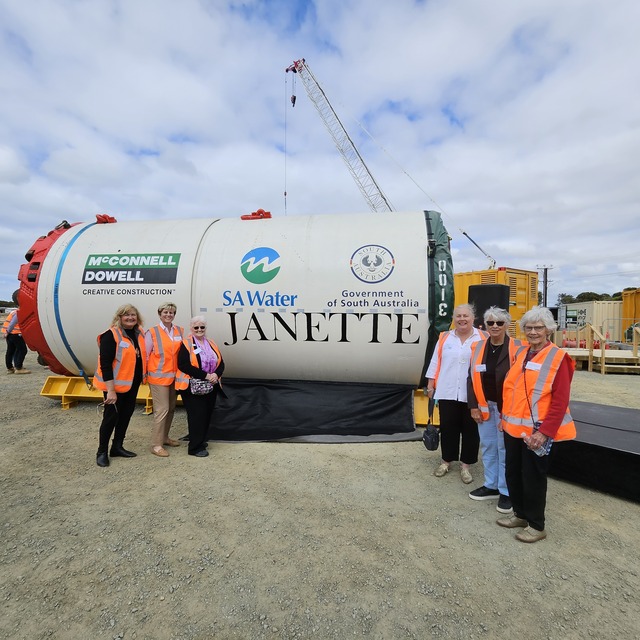
The Eyre Peninsula desalination plant’s tunnel boring machine was named Janette Octoman in January. In doing so SA Water was following a tradition dating back to the 1500s, when miners and tunnellers would pray for protection to Saint Barbara – with it now being customary to give every tunnel boring machine a woman’s name before it is used for a project.
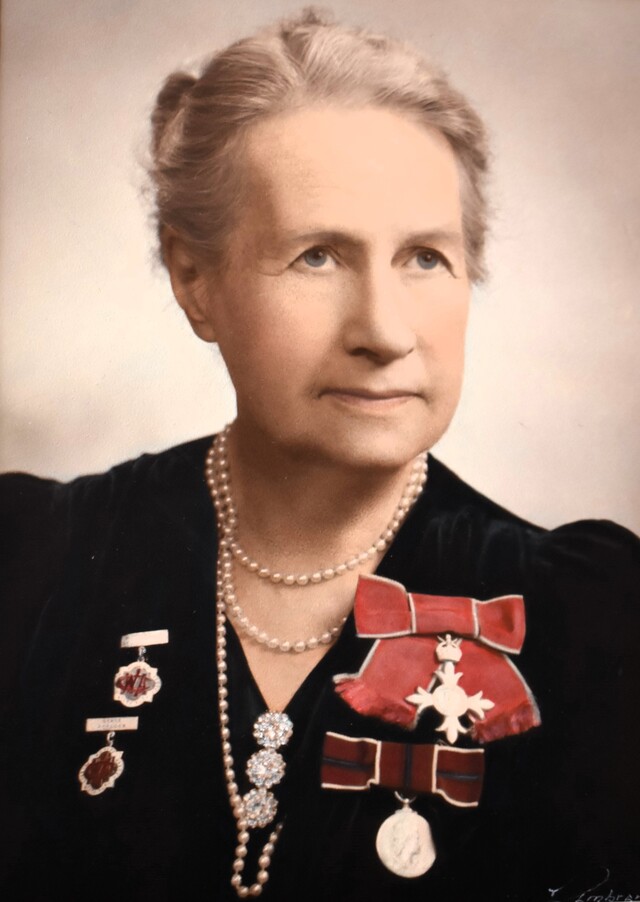
Take a step back into the past to discover more about SA Country Women’s Association (SACWA) pioneer Janette Octoman MBE.
Janette Octoman MBE made a notable impact on SACWA with projects she initiated and was made a life member of the organisation.
However, it was only part of her extraordinary contribution to the community for seven decades of her adult life.
She was born Janetta Hannum Provis on 14 November 1879 at Tumby Bay to farmer Caleb Provis from England and his South Australian-born wife Janetta, also known as Jessie.
Her schooling came entirely from her grandfather Joseph Provis – a school teacher who lived with them.
Named after her mother, she was known as Janette and officially changed her name in 1940.
It was one of four name changes, as she married blacksmith Charles Mashon Ochtomann at the Tumby Bay Methodist Church on 11 April 1903.
In the post-World War I era they changed their family name to Octoman, in 1919.
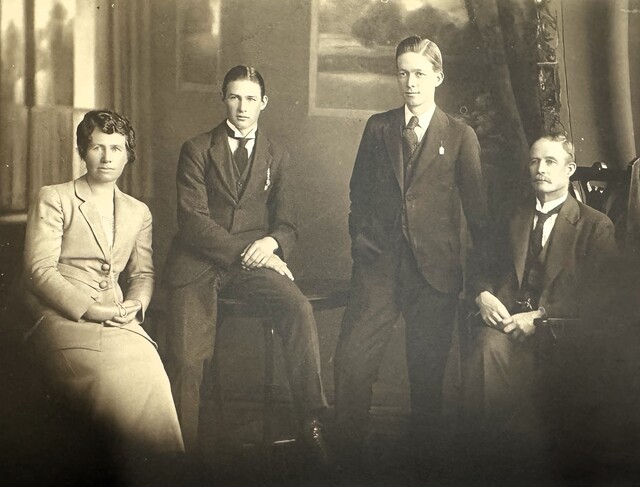
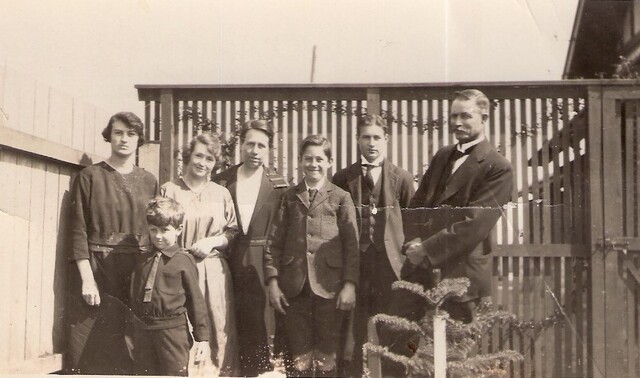
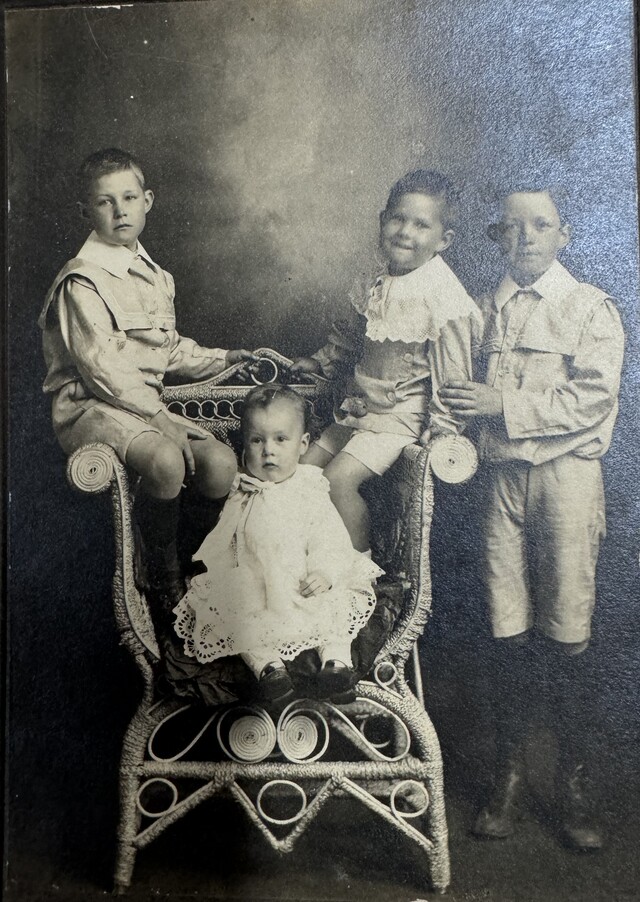
The couple had four sons – Dudley (born 1904), Joseph, known as Reg (born 1906), Vivian (born 1909) and Mervyn (born 1911).
In order to ensure their boys could further their education the family moved to Marden, in Adelaide, in 1920, with Charles working as a builder and farmer.
They returned to Lipson to live in 1927 and Janette became a Justice of the Peace.
She also became deeply involved with the local Lipson and Tumby Bay communities – including the Tumby Bay Hospital Board, Lipson Show Society and Tumby Bay Mothers’ and Babies’ Health Association – later being awarded life membership of all three.
The Lipson Memorial Hall cloak rooms were opened by Janette in 1959 – after barley crops on land owned by her family and the Barraud family were donated to the hall committee.
This allowed the rooms to be opened free of debt.
She was an organist at Lipson Methodist Church – which later became the Uniting Church – for almost seven decades
Janette had become interested in politics while living in Adelaide and was a member of the Liberal Union for the 1927 election, which was a coalition of that party and the Country Party.
She was on the state executive in 1932 and called a meeting to form the Tumby Bay Liberal Country League in 1932.
She was its inaugural president and branch president for 28 consecutive years.
Keen to see women have a voice in parliament she attempted to be the first woman elected to the South Australian Government.
Janette sought endorsement from the Liberal and Country Party for the electorate of Flinders in 1937 – but lost out to a local farmer.
She was determined to have women’s voices heard in the parliament, but women’s suffrage had only been achieved in December 1894.
South Australia was the first state, and Australia the first country in the world, to legislate women’s right to vote and stand for parliament.
However, she was never able to gain party preselection in several attempts – losing out to a man every time – but that did not stop her trying to enter the South Australian Parliament as an unendorsed candidate twice, plus the Australian Parliament’s senate on another occasion.
Janette’s final attempt was in 1944, when she was an unendorsed Liberal trying to enter the SA parliament.
However, it was not until 1959 – 15 years later – that the first two women were elected to the South Australian Parliament.
Janette is most widely known for her contributions to women, families and the community through the South Australian CWA.
She threw herself into getting the organisation off the ground on Eyre Peninsula and was a foundation member of Tumby Bay SACWA when it formed in 1933.
The same year other EP branches were formed at Wirrulla, Ceduna, Elliston, Cummins, Port Lincoln, Cleve and Yeelanna.
More would follow in subsequent years and the majority still exist today.
Janette went on to be branch president from January to July 1937 and again from 1941 to 1946.
She was also Eyre Peninsula division president from 1937 to 1944, and group president from 1946 until 1949 – which included Far Western, Buxton and Octoman groups – the latter named in her honour to this day.
Janette travelled 1696 miles (2729 kilometres) by road just visiting the 20 Eyre Peninsula branches in 1939.
Her contribution to CWA grew after her husband Charles died in 1949, as Janette took on the role of South Australian president from 1949 until 1952.
During those three years Janette visited each of the state’s 236 branches – at a time when travel was much more difficult than today.
That in itself was a considerable feat, made more so given she was 70 when she started that term.
It was only in 1948 that the CWA held its first kiosk at the Royal Adelaide Show, with its first SACWA conference held the week before, because of the difficulties of getting members of branches together.
The SACWA building at Dequetteville Terrace was bought in 1959 in what Janette described as “a red letter day for the CWA” as the need for a headquarters had become urgent.
In the post-World War II decade, the CWA continued a number of wartime activities, including collecting fat and making it into soap – with 470 cases weighing 10-and-a-half tons sent to Britain.
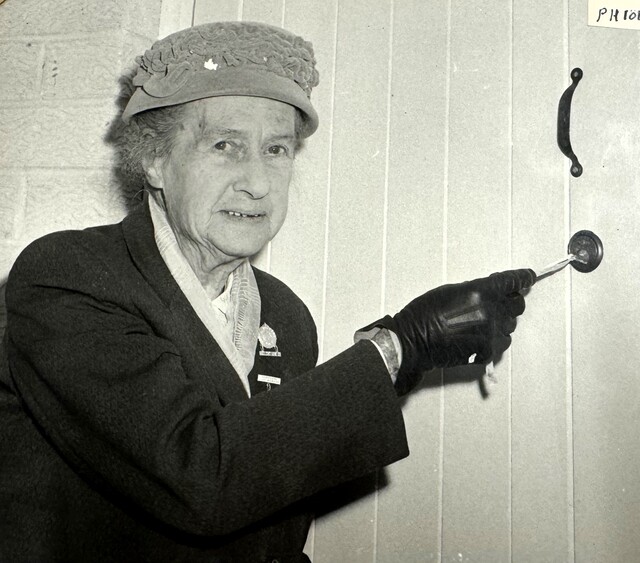
Janette promoted establishing CWA seaside holiday cottages and personally opened the ones at Port Lincoln in 1955 and Tumby Bay in 1957.
She was the branch member to negotiate for the land on the Tumby Bay foreshore at The Esplanade.
Janette was the instigator behind periodic three-day homemakers’ schools.
From 1952 to 1955 and again from 1956 until 1959.
However, she was asked to take over as interim state president’s role for a year from 1955 to 1956.
The CWA opened its first Home for the Aged at Clare, called Carinya, with Janette undertaking the official opening.
Her CWA involvement took her well beyond her local branch – among other things she was the South Australian CWA representative of the Associated Country Women of the World.
She travelled by ship to attend the International Council of Women jubilee conference, which was held in Edinburgh in July 1938.
Janette was made an honorary life member of the SA CWA in 1954.
An even greater honour was bestowed on her the same year, when she was awarded a Member of the British Empire, and presented with it at Government House in Adelaide by Queen Elizabeth II herself.
Those who remember meeting her, such as her great-granddaughter Robyn Octoman and Ungarra SACWA member Valmai Webb, said Janette excelled at needlework and tatting, was a keen gardener and a great cook.
She won many prizes at SACWA group days, and also at the Lipson and Royal Adelaide shows.
Janette entered several sections at the Royal Adelaide Show with up to 150 entries in a single show despite the distance she lived from there.
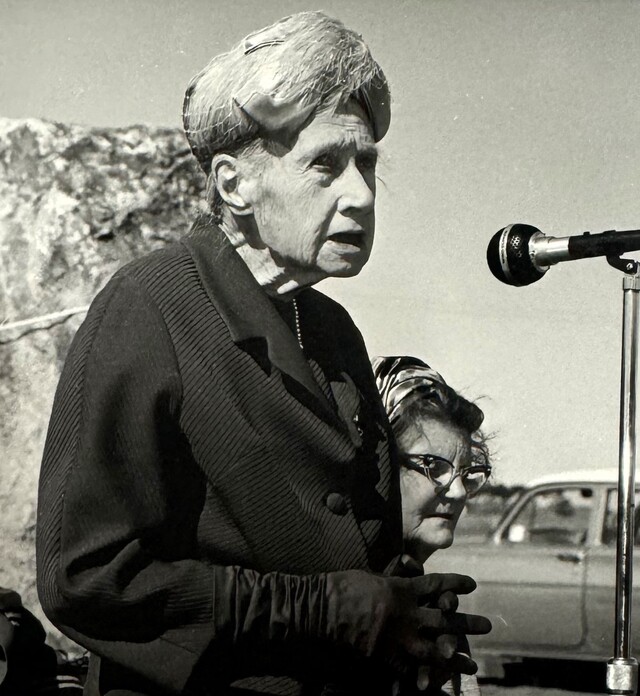
She lived in Adelaide for the final three years of her life but returned to Lipson to unveil a plaque named Janetta Octoman Drive in her honour at Lipson on 25 October 1970 – a few weeks before her 91st birthday.
Tumby Bay District Council, the Highways Department and CWA Octoman Group met on 26 May 1970 to organise naming the area from the township of Lipson to her nearby former home Callena, a monument stone and a plaque.
In all, 31 Octoman Group CWA members were involved in planting 165 trees along the drive.
The honour came from a Cockaleechie CWA Branch to honour her and to mark the silver jubilee of the Octoman Group.
Janette died in Adelaide on the 23 October 1971 and was buried in Lipson Cemetery.