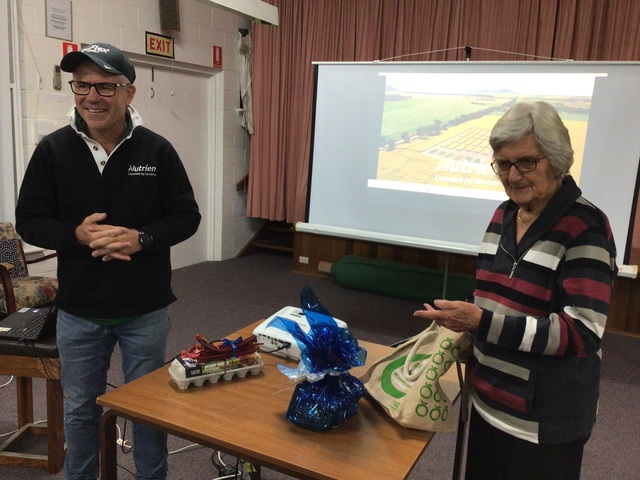
Members and friends of the Charlton Women in Agriculture and Business group learned about the work of the Nutrien Ag services based in Cummins.
Christopher Pearce, who has been working on Eyre Peninsula as an agronomist and farm adviser for many years, outlined his work covering most of the cropping areas on the peninsula.
The business, which is self-funded, began trials in 1998 and now has 10 to 14 sites and runs 2500 to 4000 plots most years.
Nutrien focuses on plant varieties in the different soils and rainfall areas as well as use of pesticides, fungicides and fertilisers at different rates to scientifically evaluate the effectiveness of each across the crops.
The trials are conducted usually on land donated for the purpose by the farmers/owners.
He outlined the major problems for EP farmers when growing crops: black leg – especially in canola which spreads quickly in the weather conditions – and powdery mildew and eye spot in wheat are current worries.
Special machinery is used at each stage, with yields of each plot carefully measured and collated.
Mention was made of rye grass resistance to Roundup. He reminded the group that if something was proving a good thing it was wise not to continue to use it.
Chris’ talk using a PowerPoint presentation clearly showed the different outcomes of the various strategies being tested, which proved very interesting.
He also gave a summary of the region’s 2025 crop growing year, reminding the group of the lowest summer rainfall on Lower EP, that opening rains did not arrive until around late May, with 50 per cent of crops sown dry – mostly wheat and canola.
Better rain arrived in mid-June, while July was wet, August was OK, September was very dry, but October rainfall was above average – so now it is a case of wait and see.
Chris thinks the region is in “pretty good shape” coming into harvest.