A journey aboard the Tacoma headed for Taylor Island provides a window into region’s pioneering past.
A Cornish fisher shuffles past me in the galley, a nurse from the city says hello in the berth and I delve into a familiar conversation with an environmental scientist from Port Lincoln – all within minutes of boarding the Tacoma.
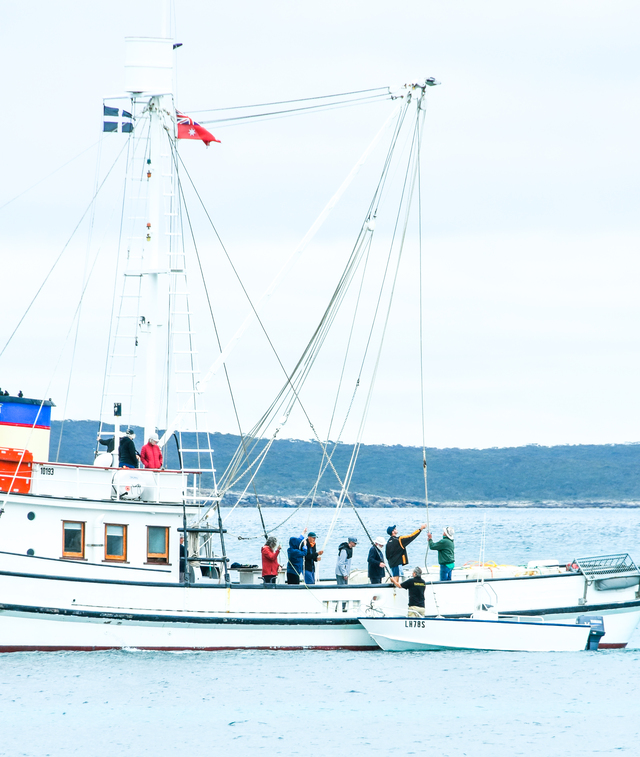
This, Australia’s first purpose-built tuna purse seine fishing boat, is our abode for the next half-day or so, as we set off on the annual Taylor Island wool pick-up.
Stepping aboard on a misty November morning, we are to take part in a piece of South Australia’s fading past, and the excitement of the passengers as we prepare to experience this nod to days gone by is palpable.
Once a year, the Tacoma Preservation Society organises the unique trip from Port Lincoln which passes Donnington Lighthouse, and heads down the Thorny Passage arriving at Taylor Island.
The mission was to pick up some 16 wool bales and safely deliver them back to Lincoln Cove Marina.
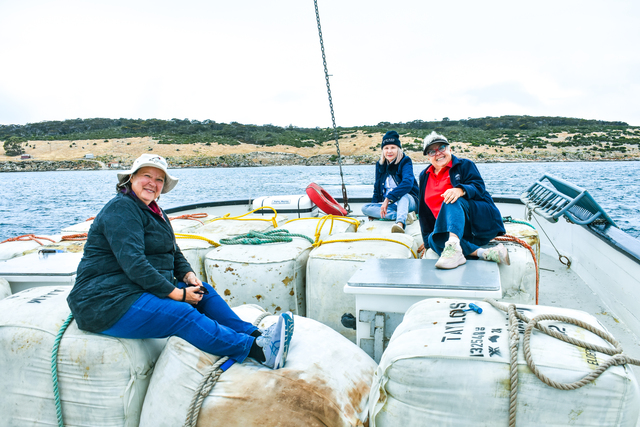
The boat bustles with people of all ages, from all walks of life, ready for a day on the water.
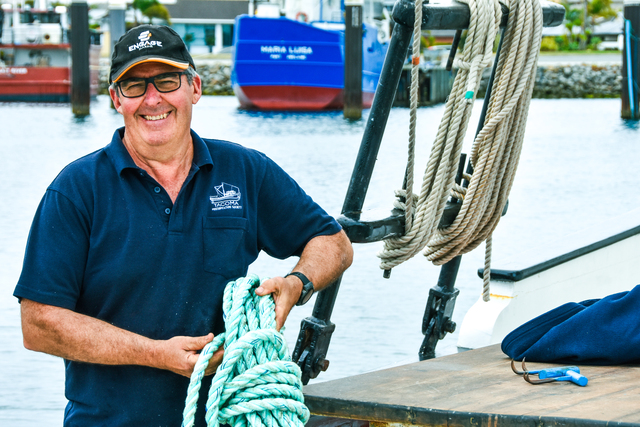
Skipper Ross Haldane mentions one would be hard pressed to find a person that doesn’t somehow have a connection to the Tacoma.
We chat with hot teas and coffees in hand while the crew prepare the boat to sail; mooring ropes released, the engine begins its deep low rumble at a leisurely 420 revs per minute, and soon enough we pass out the gateway of the marina to cruise the dramatic Eyre Peninsula coast.
As we make our way to the island, guests mosey in and out of the galley, warmed by the old 1950s Aga cooker.
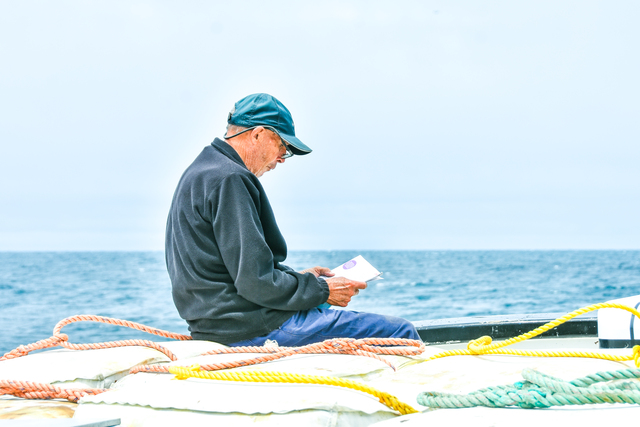
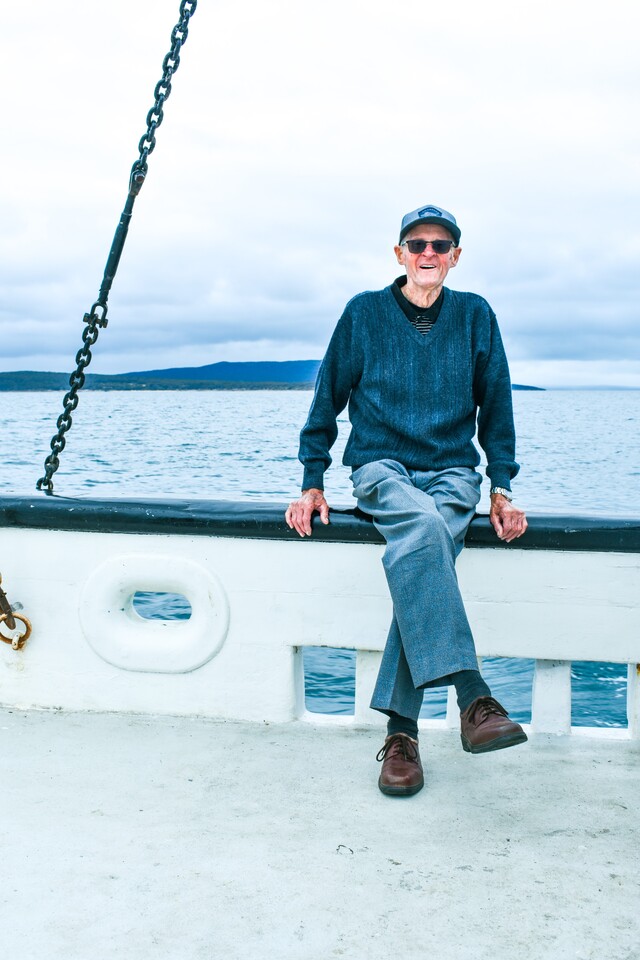
Also on board is 91-year-old Jack Bellamy, for whom the cream Aga remained a source of pride and joy.
Jack has fishy tails to tell us all, like the time he and five others poled some 40 tonnes of bluefin tuna in four-and-a-half hours.
That is just the start. Jack had also trained as a butcher and recalls how the islands were like a watery supermarket, their fat saltbush-fed sheep just the ticket to roast in the boat’s oven.
Jack has memories of the Tacoma spanning a lifetime, as for 17 years the Tacoma was his home and like all stories about the sea there is hardship – his twin brother was lost at sea from the back deck of his beloved home at only 25.
On our trip, nearly 70 years later, Jack potters in the kitchen, organising morning tea, offering up more hot drinks, doing dishes and charming guests with his calm and open manner.
A sea dog through and through, his experience on the water couples well with the rest of the Tacoma Preservation Society crew.
There is an obvious shared passion by all working the boat – and a place for everyone with everyone in their place.
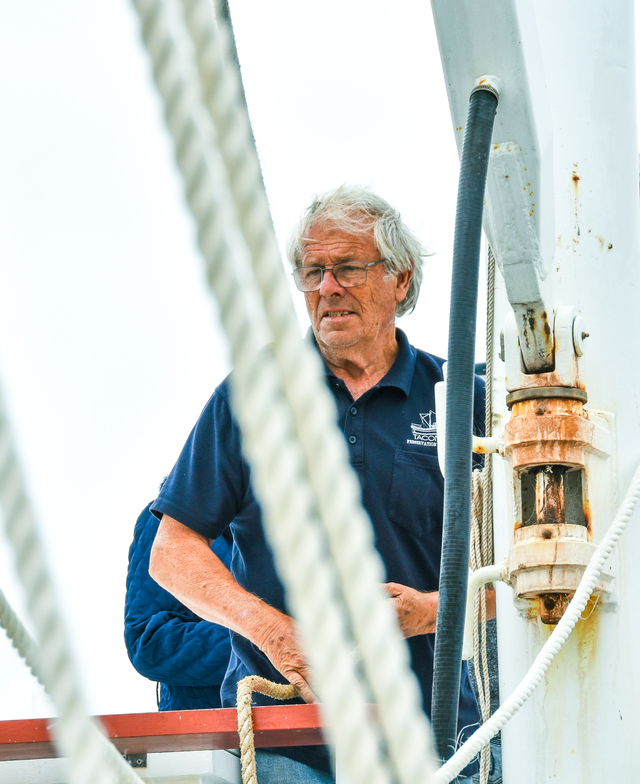
Time flows and we wander around the decks, peering down the wooden ladder to the engine room, and high above we stand in the lofty wheelhouse where skipper Ross has a hand on one of the eight steering wheel spokes, now worn by countless turns.
We watch the horizon as the coastline changes from mallee scrub to slivers of sandy beaches, sheer cliff drops and into a final shift of old farm land speckled with large granite rocks as eventually, Taylor Island comes into view.
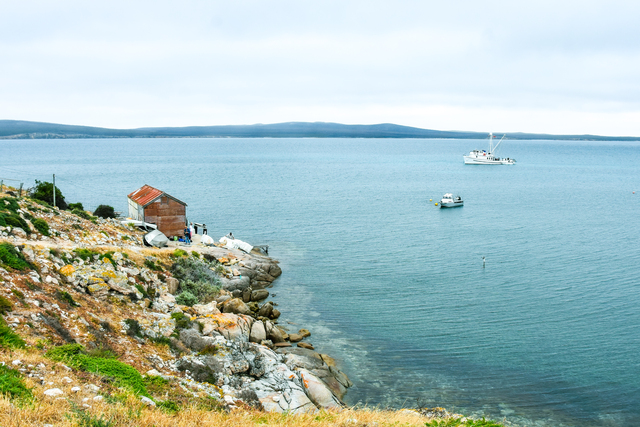
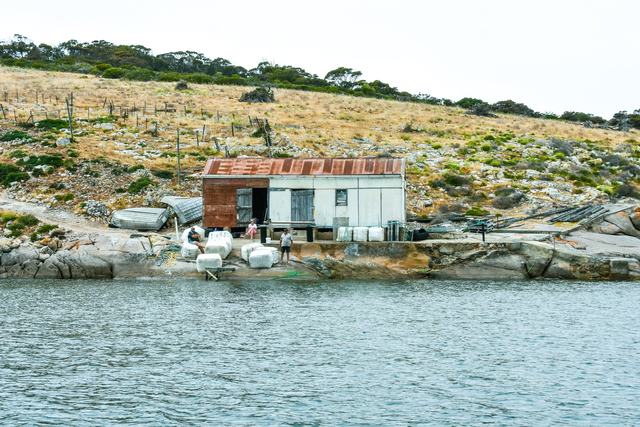
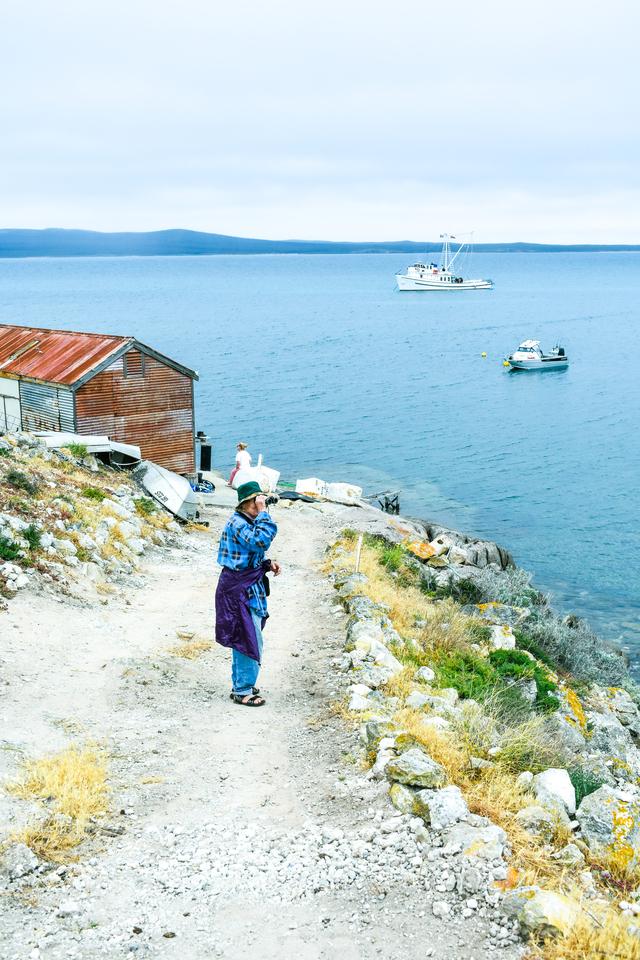
The sheltered cove of the island seems the perfect place to find a little red woolshed at the water’s edge.
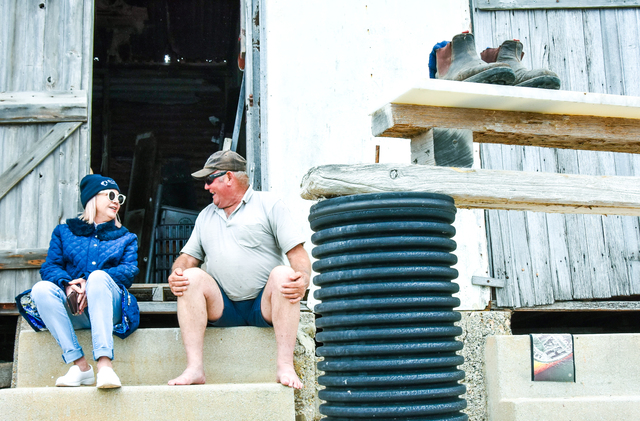
Four people are out the front, sitting on steps and hay bales, casually waiting as Tacoma committee captain Trevor Fulmer drops anchor.
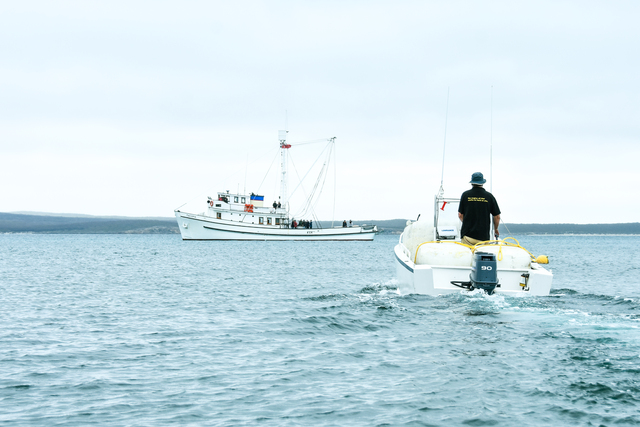
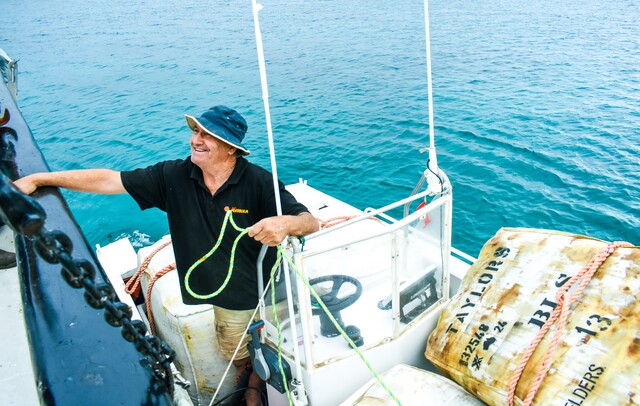
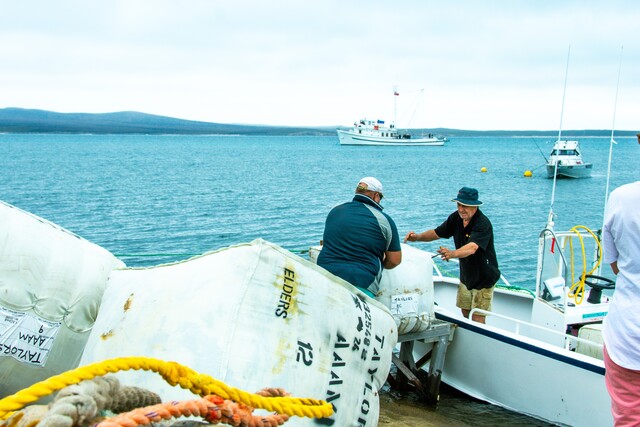
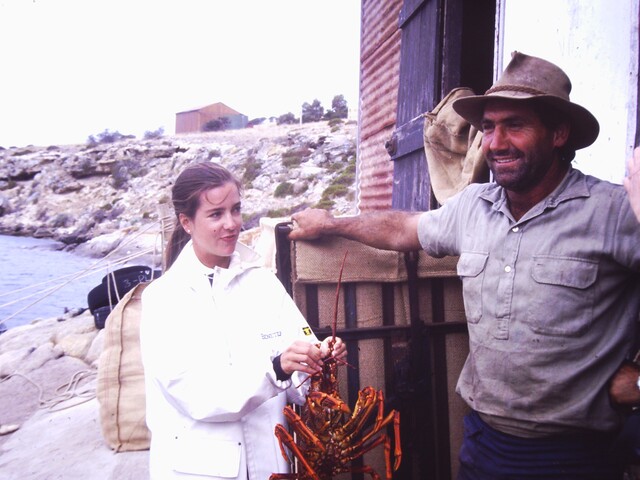
The man who runs the sheep, Ray Watherston, meets us on his centre-console tinny, with the first lot of bales ready to be lifted aboard rope and tackle as if time has not moved forward.
The visitors among us climb over the sturdy bulwark down into the empty tinny for a quick trip to explore the island.
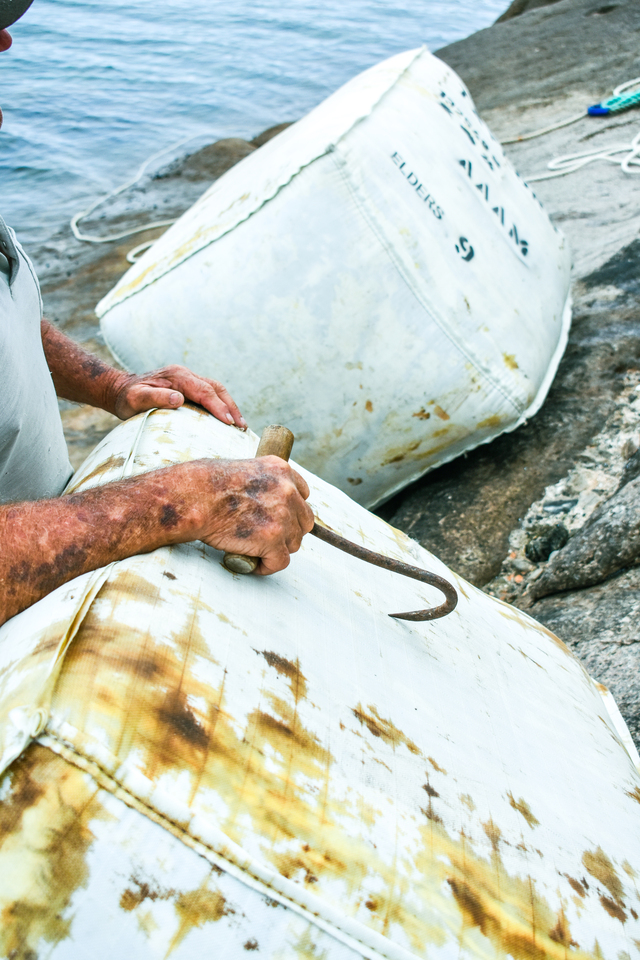
As we disembark at Taylor Island, Ray and his mates start to get the next load ready, flicking their hooks into the bales and rolling them down into the tinny.
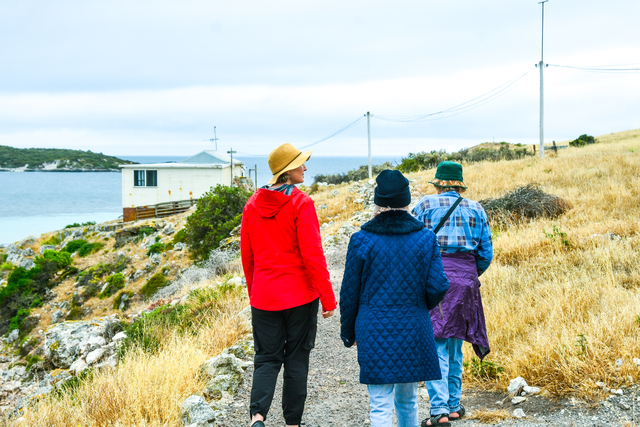
A few of us go off to explore, heading up a dirt track.
Akin to an abandoned village, sheds dot the road leading to the island shack, visitors sparse except for native wildlife.
The homestead sits a few metres from the edge of the beach looking right out over the water, spectacular views with Owen Island not far off in the distance.
All eight nearby islands carry the names of the eights sailors lost from Matthew Flinders’ 1802 expedition.
To the south is Memory Cove where Flinders’ ship, the Investigator, anchored after losing sailors at Cape Catastrophe nearby.
At Memory Cove he erected South Australia’s first memorial plaque which had an engraved sheet of copper attached to a stout post – ‘NAUTICI CAVETE!’, it read, or ‘Sailors take care!’.
We turn to make our way back down the track, passing a Hills Hoist standing tall near an old cement mixer; both add to the rusty colours of the granite nearby – all part of the island’s charm.
After pondering the change in times and marvelling at the beauty of the island, we make our way back down to the little red woolshed and watch the last three bales get rolled up a plank and loaded into Ray’s tinny.
The sheep are not shorn in the little woolshed anymore, but in a new galvanised shed on top of the island.
Sheep prefer to be mustered there rather than taking the steep dirt track to the waterside – something about sheep not being beachgoers.
There is plenty to suggest the little red woolshed once rang with the sound of shearers’ clippers and the drove clomping through its motions.
From the distance, the Tacoma is an impressive view in the sea, with its lofty mast crow’s nest and the long sweeping arc of the white painted timber hull.
Bidding the island farewell and back aboard, rumour spreads a tuna poling demonstration is being organised for the trip back; a welcome surprise.
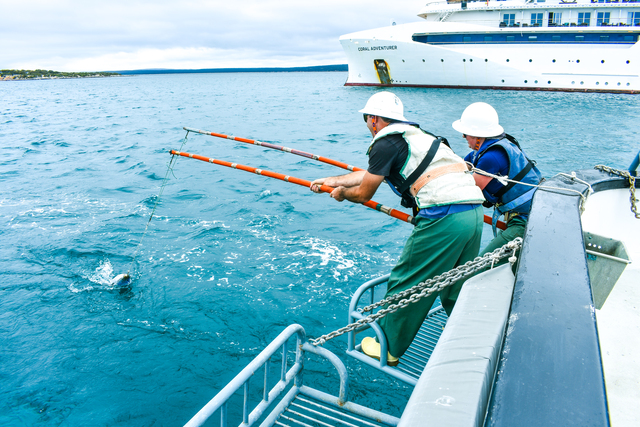
Tacoma Preservation Society member Claire Webber and aforementioned Cornish fisher Callum Hardwick don waders and safety gear to throw back to the glory days of tuna poling.
Standing on the outboard steel racks, the pair wrestle 10-foot poles with clasped hands and arms outstretched, backs at the ready and on the count of three Tina the 10kg tuna is heaved over the bulwarks to land with a thud on to soft bales of wool.
Tina is not a real tuna, so no tuna are harmed in the demonstration, but with wool bales on board it would have been a safe landing for any catch.
A book sits on the galley for guests to peruse, including photos from the 1950s when the Tacoma was an operational tuna fishing boat proving the vessel held its own, the deck filled to the brim of the hull with wild catch destined to be canned at the local cannery.
We make our way back to the marina, lazing, snacking, taking in the coast and watching the crew work, in due course sighting Ray, who patiently waited to receive the wool.
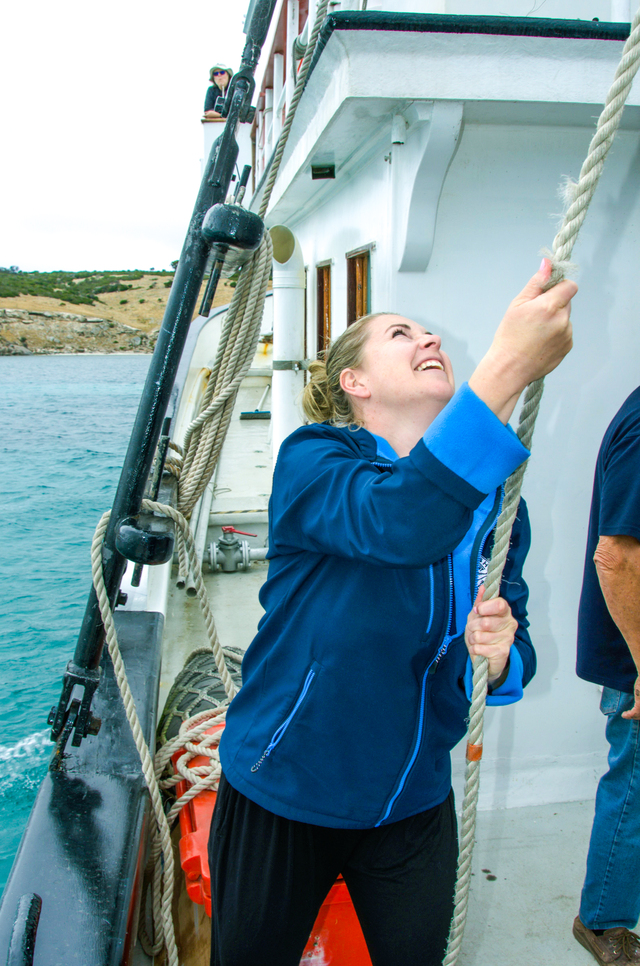
The unloading is a sight to behold. No new age forklifts or modern packaging here, rather skilled hands working around the deck winch drum, a handful of crew throwing ropes around a bale at a time then lifting them into the sky and slewing them across to the awaiting truck.
Once the deck is clear, we cruise back into the Tacoma’s berth and pack up our belongings while the crew stow the ropes and clean up the boat.
The world has changed, and many have come and gone.
The tradition of the Tacoma’s Taylor Island wool pick up is an engaging way for guests to see what once was and what now is, while meeting new people, eating good food and cruising through the turquoise waters along the Eyre Peninsula coast.
The sea dogs bid us all farewell as they stow the ropes and clean the decks and we step back on to the mainland, more informed and invigorated.